

Credit: Team Cherry
reviewReview
Hollow Knight: Silksong is brilliant, brutal, and hard to love
May 26, 2026·7 min read
Hollow Knight: Silksong is a sharper, faster, meaner sequel than I expected. It keeps the lonely beauty of Hollow Knight, but it does not simply give me more of the same. Hornet moves differently, fights differently, heals differently, and forces the whole game to run at a higher speed. That gives Silksong its own identity, but it also makes the experience harsher from the start.
I admired it almost constantly. I enjoyed it less consistently. That is the strange tension running through the whole game. Silksong is beautifully made, full of smart design, strange creatures, and platforming that can feel incredible once I am moving well. It is also punishing in ways that sometimes feel less like a test of mastery and more like the game refusing to give me room to breathe.
Hornet changes the whole rhythm
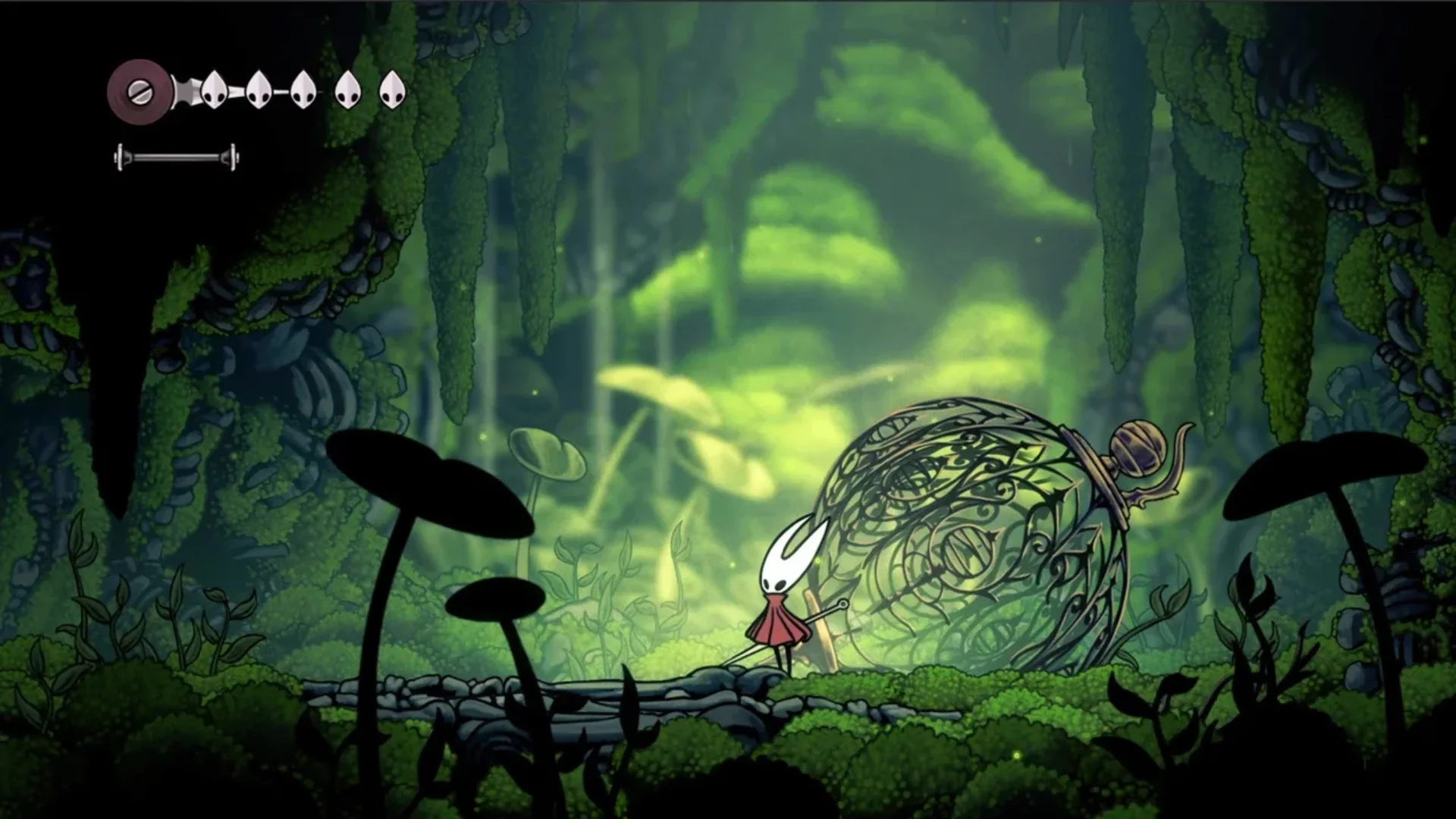
Hornet is not the Knight with a new coat of paint. She is taller, faster, more expressive, and more aggressive, and Silksong builds around that difference. Her movement has a forward pull to it. Jumps feel longer. Attacks cover different angles. Even simple traversal has more snap, as if the game wants me to stay in motion rather than creep through each screen.
That change makes the early hours feel uncomfortable in a good way. I had to unlearn some habits from Hollow Knight. Hornet’s downward strike is angled, which changes how I bounce on enemies and hazards. Her healing asks for silk and space, and that makes recovery feel more deliberate. I could not rely on the same instincts. The sequel earns its name by making me play differently.
When it clicks, Hornet is wonderful to control. She darts through fights with a confidence the Knight never had, and the best platforming rooms turn her movement into a tense little dance. The problem is that the game often expects that confidence before I have fully earned it. Silksong gives me a better body, then throws me into a world that seems determined to bruise it.
Pharloom is beautiful, but never gentle
Pharloom is a stunning setting. It feels more vertical, more ornate, and more alive than Hallownest in some ways, with cities, roads, chapels, workshops, wild areas, and strange communities stacked into a kingdom that seems to keep pulling upward. It has that familiar Team Cherry talent for making a place feel ancient without explaining every corner of it.
The art and music do a huge amount of work. A new area can feel inviting for a few seconds, then quietly turn hostile once I notice the enemies, traps, and awkward paths waiting inside it. That contrast gives Silksong its best mood. Pharloom is not dead in the same way Hallownest was. It feels busier, louder, and more alert. That makes it exciting to explore, but also more tiring.
Exploration still has the old pleasure of finding a path I was not sure existed. A locked route, a hidden bench, a new tool, or a strange NPC can still pull me deeper than I planned to go. But Silksong is less patient about that process. It pushes harder from room to room. I kept wanting to see what was next, even when I knew the next screen might be another fight that punished one careless jump.
The difficulty cuts both ways
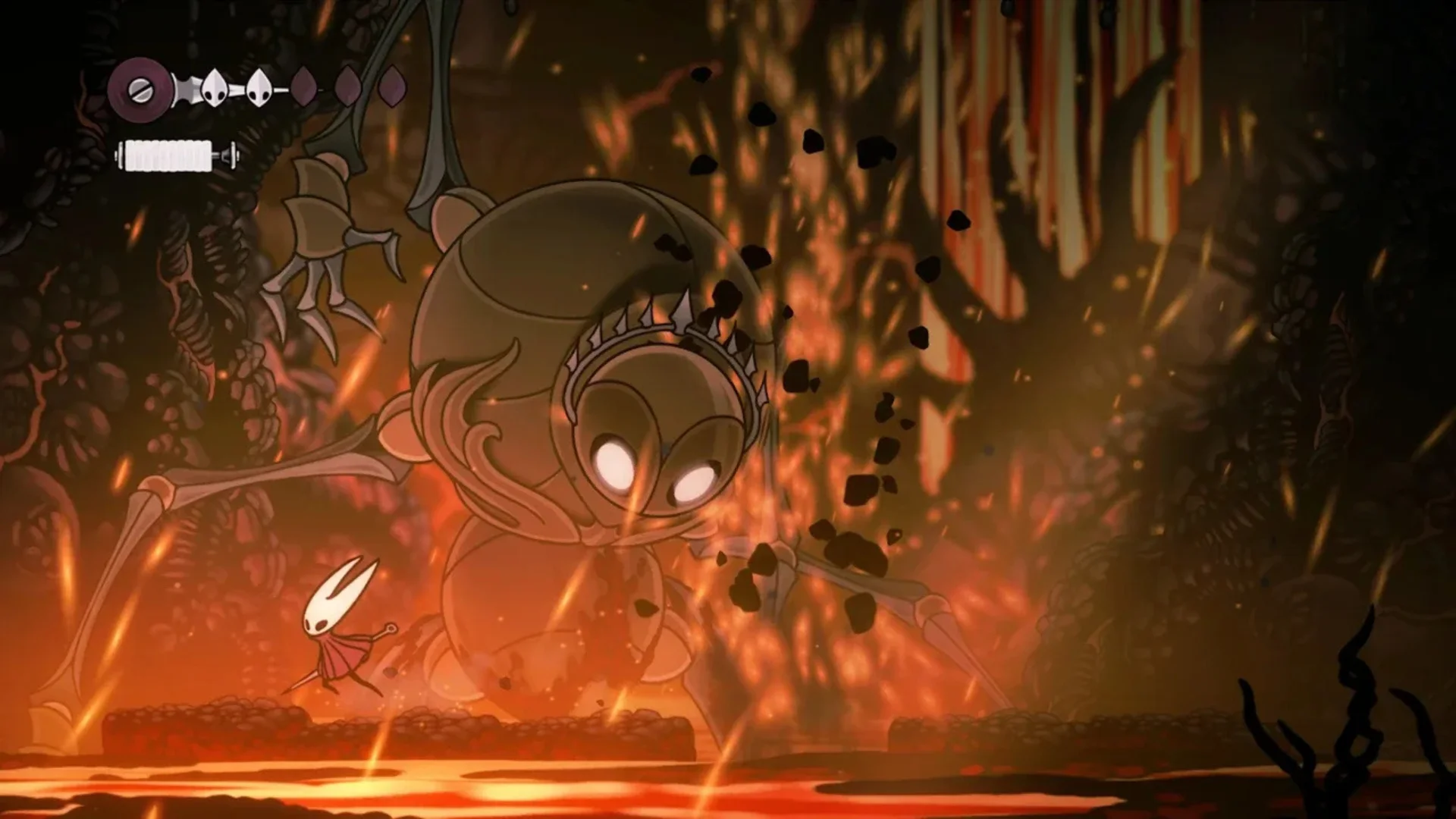
Silksong is hard, and not just in the clean boss-fight way people often mean when they praise difficult games. It is hard in the walk between benches. Hard in the enemy placements. Hard in the damage values. Hard in the way a rough platforming section can send me back through danger I had already survived once.
Some of that difficulty is excellent. The best fights ask me to read attacks properly, commit to movement, and use Hornet’s tools with discipline. I had several bosses where frustration slowly turned into understanding, and then into that familiar rush when the final hit landed. Those moments are still special. Few games make victory feel quite like this series does.
But Silksong can also feel stingy. Double-damage hits appear often enough that mistakes become expensive very quickly. Benches can feel too far from where I need to be. Some enemy patterns are more annoying than interesting. I do not mind being punished for playing badly, but I lost patience when the punishment felt stretched out by the run back or by a screen that seemed built to tax me before the real challenge.
Combat is fast, fierce, and sometimes crowded
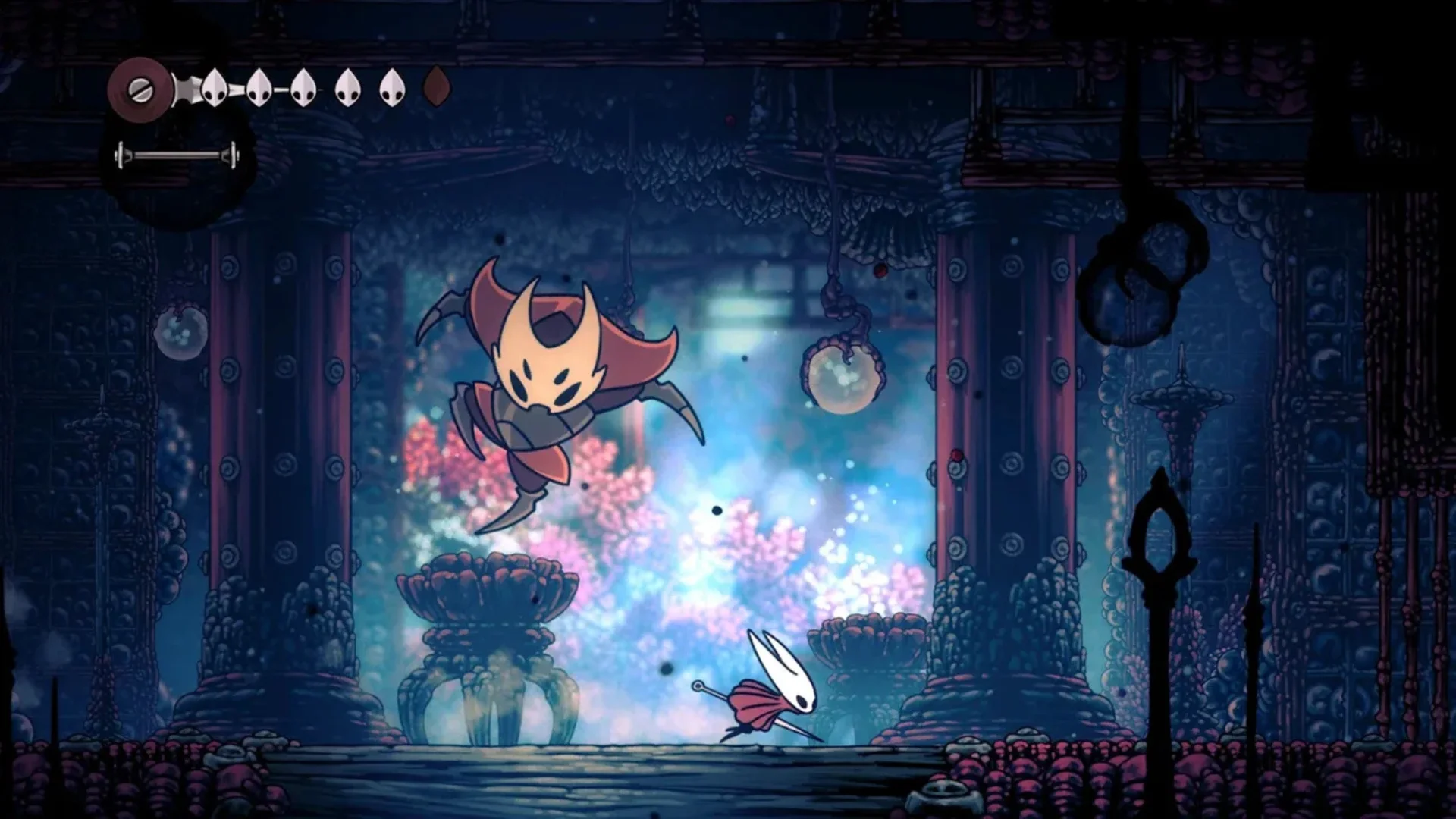
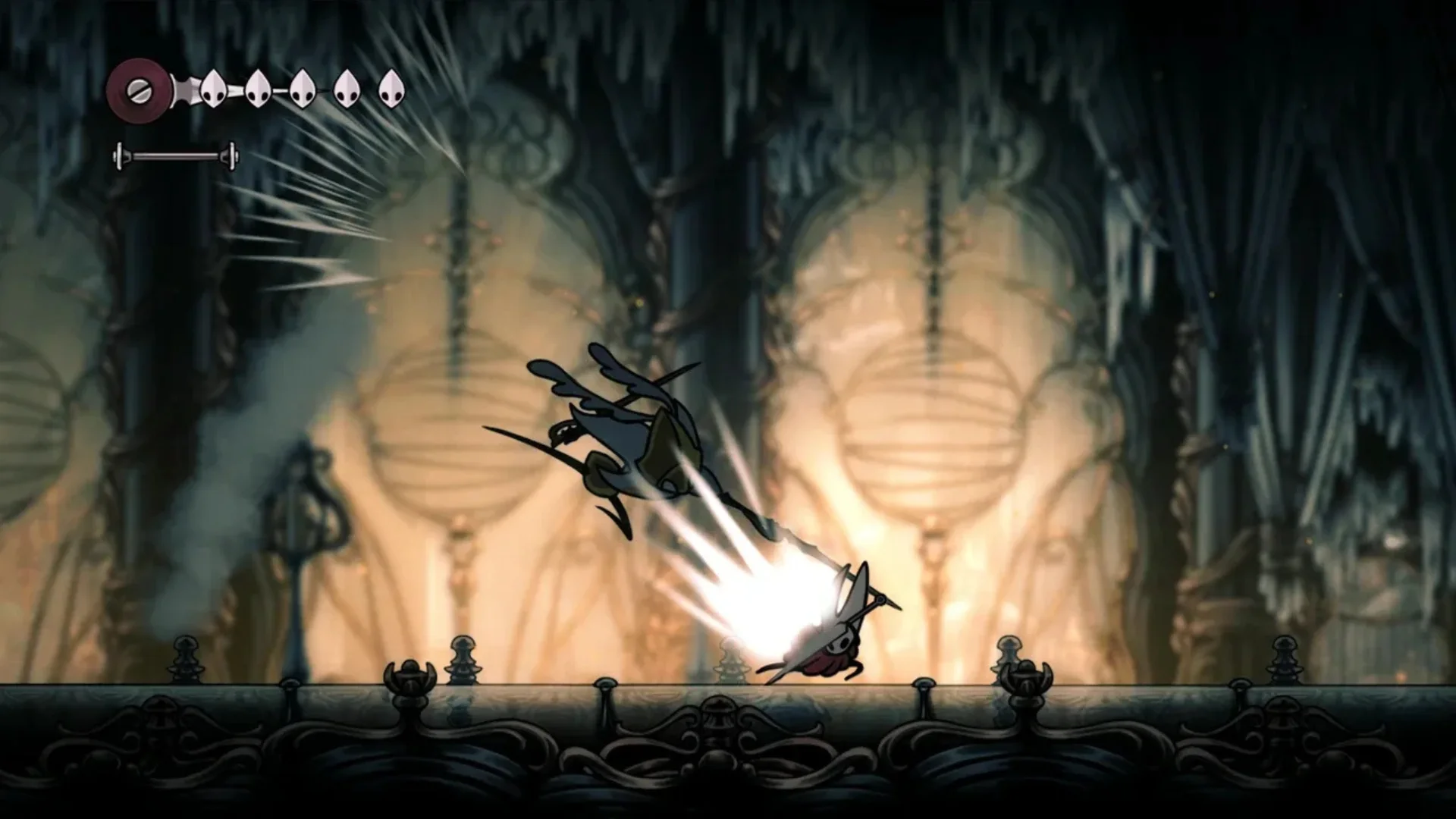
Combat has a sharper edge because Hornet is more active than the Knight. She can pressure enemies quickly, reposition with style, and use tools that give fights a busier rhythm. The best encounters make me feel like I am threading through danger rather than simply waiting for my turn to swing.
That speed gives bosses a different flavor. Many of them feel designed to match Hornet’s movement instead of letting her dominate the room. They close distance quickly, attack from awkward angles, and force me to heal carefully. When a boss is well tuned, the fight becomes tense without feeling unfair. I am not just memorizing attacks. I am learning how to keep control while everything is moving faster than I want.
The weaker fights expose the downside of that pace. Some arenas feel too cramped for how much is happening. Some enemies take a little too long to kill for how often they appear. A few encounters seem to confuse pressure with clutter. Silksong is at its best when combat feels precise. It is at its weakest when I feel like I am fighting the room as much as the creature in it.
Related Article

newsBreaking
LEGO Donkey Kong is official after a perfect barrel tease
May 22, 20263 min read
Progression is satisfying after a rough start
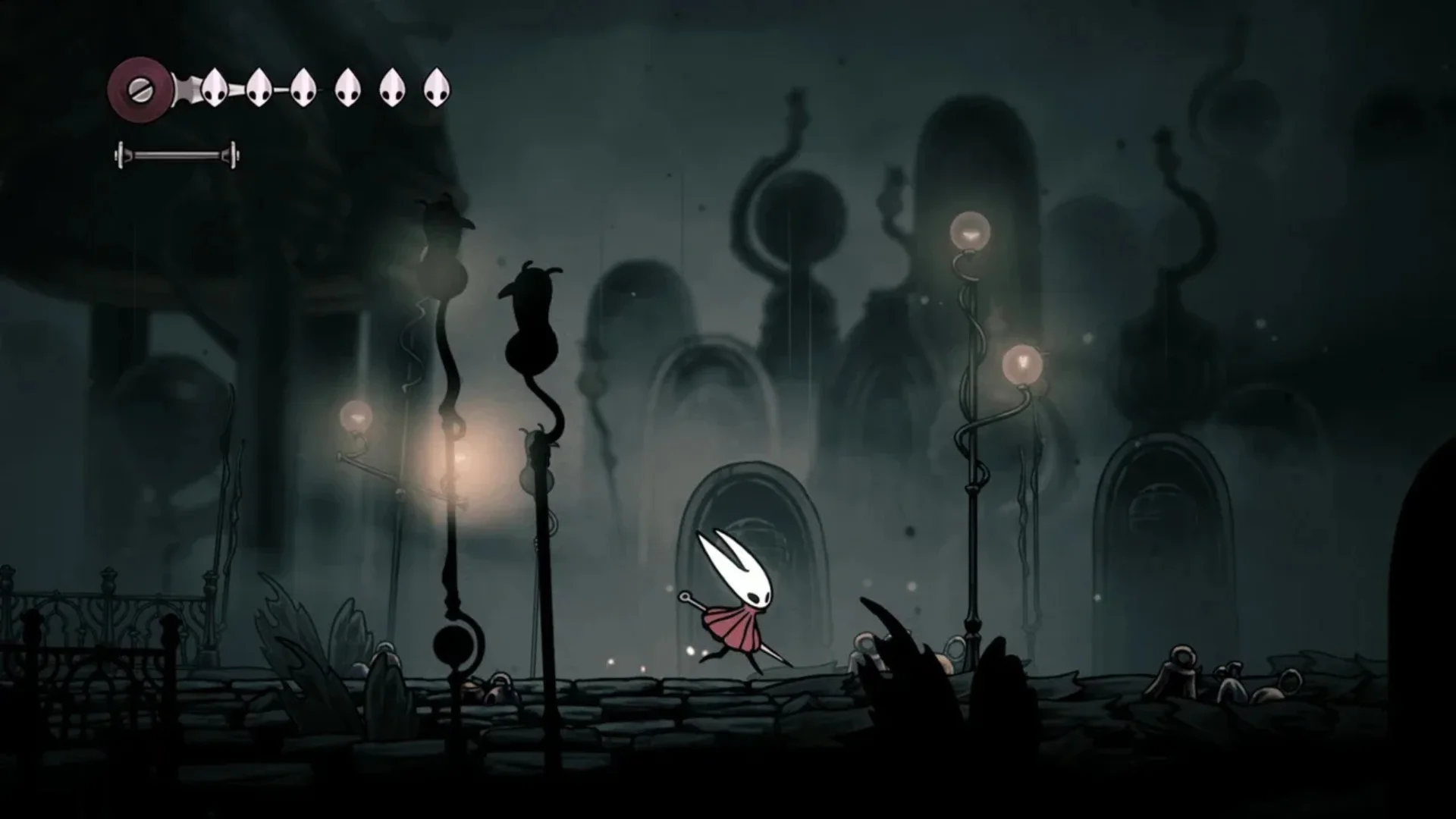
Silksong takes time to open up. The first stretch can feel restrictive, partly because Hornet is capable but not yet comfortable, and partly because the game withholds some of the tools that make exploration more enjoyable. I felt the early pressure more than I expected, and I can see some players bouncing off before the game starts showing its wider shape.
Once the upgrades, routes, and systems begin to connect, the design becomes easier to appreciate. New abilities change how I move through old spaces. Side paths start to make more sense. The economy, quests, tools, and equipment give me reasons to return to places that once felt hostile. The world becomes more readable without becoming simple.
That long-term satisfaction is real, but the game makes players pay for it. Silksong does not offer comfort early, and it does not seem very interested in persuasion. It trusts that the movement, world, and combat will carry me through the rough first hours. For me, they did. For players who already found Hollow Knight demanding, this sequel may feel like the door has been narrowed rather than opened.
Silksong is worth playing, but not for everyone
Hollow Knight: Silksong is a superb sequel in craft and confidence, but it is not an easy recommendation. It is more intense than Hollow Knight, more demanding from the start, and less willing to soften its roughest edges. Players who want a smoother or more forgiving Metroidvania may find it exhausting long before its best ideas have room to bloom.
I still think it is worth playing. Hornet is a brilliant lead, Pharloom is rich and strange, and the best platforming and boss fights are good enough to cut through the frustration. But this is not a gentle return to a beloved world. Silksong is beautiful, severe, and sometimes maddening. I respected it even when I was annoyed by it, and by the end, that felt like the most honest reaction the game could have earned.
Hollow Knight: Silksong
Xbox Series X|SPlayStation 4Linux
Released
September 4, 2025
Developer
Team Cherry
Publisher
Team Cherry
Systems
Xbox Series X|S
PlayStation 4
Linux
Nintendo Switch 2
PC (Microsoft Windows)
PlayStation 5
Mac
Xbox One
Nintendo Switch